
The Hidden Cost of AI: The Mounting eWaste
As we mark International E-Waste Day on October 14, a troubling reality demands our attention: the artificial intelligence revolution is poised to exacerbate the growing eWaste problem.
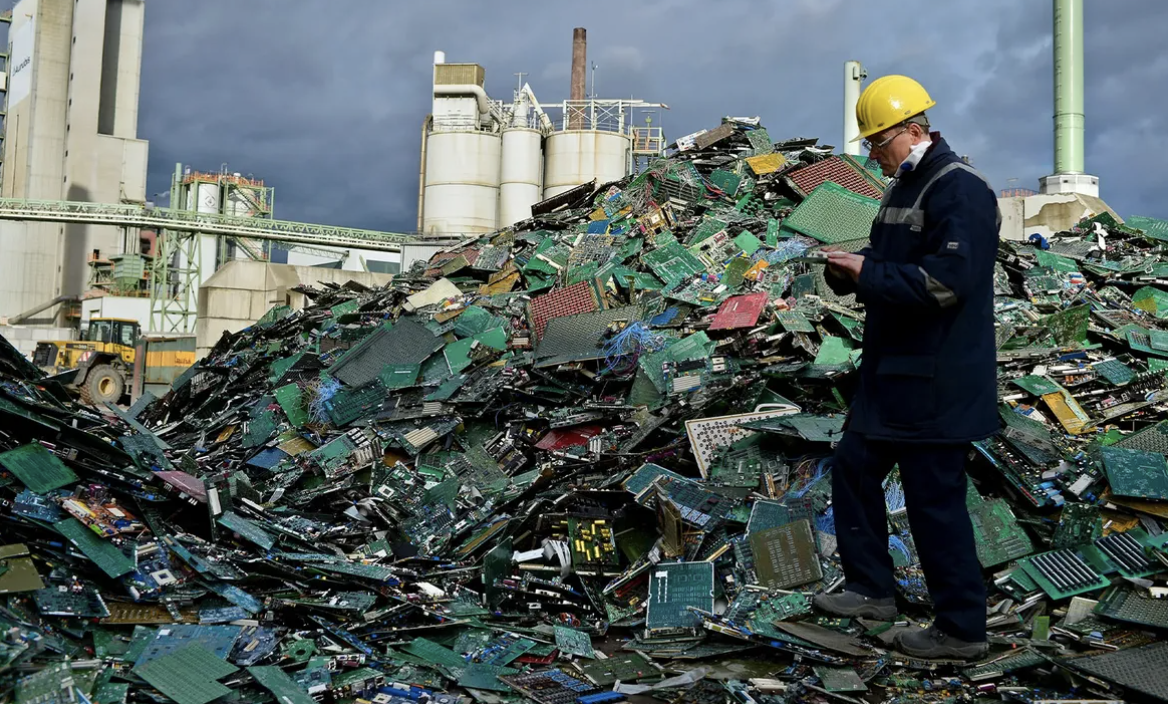
The world produced a staggering 62 million tonnes of electronic waste in 2022, enough to fill 1.55 million 40-tonne trucks encircling the equator (e-Waste Monitor 2024). And while that figure is climbing by 2.6 million tonnes every year, the most alarming part is this toxic mountain is growing five times faster than our ability to recycle it. Only 22.3% of global eWaste reaches proper recycling facilities, leaving $60+ billion in recoverable resources squandered annually (MIT Technology Review).
Behind AI's dazzling capabilities lies an uncomfortable truth about obsolescence. The GPUs and specialized servers powering generative AI aren't failing most of the time; they're being discarded. In high-utilization AI data centers, graphics processing units last just 1-3 years before replacement, not because they break, but because rapid technological advancement renders them economically obsolete. With NVIDIA releasing new GPU generations every year or so, each offering 2-4x performance gains, yesterday's cutting-edge hardware becomes tomorrow's liability.
According to a report from the Circular Economy for the Data Center Industry, the eWaste from AI Data centers alone exceeds 10 metric tons annually. Combined with the breakneck pace of data center expansion, where over 80% of replaced equipment is discarded rather than reused, we're accelerating toward an environmental tipping point. The servers and GPUs training large language models are designed for intensive computational workloads that make them ill-suited for redeployment once training completes, creating mountains of functional but economically obsolete equipment.
The environmental toll extends far beyond landfills. When improperly disposed of, AI hardware releases lead, mercury, cadmium, and hexavalent chromium into soil and water systems. These toxins bioaccumulate through food chains, causing neurological damage in wildlife, collapsing fish populations, and contaminating drinking water sources miles from disposal sites. Children in communities near informal recycling operations face irreversible developmental harm from exposure to over 1,000 chemical substances released during unsound recycling practices (World Health Organization).
The circular economy offers a path forward. Microsoft's Circular Centers achieved a 90.9% reuse and recycling rate in 2024, demonstrating that ambitious targets are achievable (Microsoft). AWS diverts over 99% of decommissioned hardware from landfills through comprehensive asset recovery programs (Amazon). These initiatives prove that extending equipment lifespan and implementing responsible end-of-life management can dramatically reduce environmental impact. Studies suggest circular economy strategies could cut AI-related eWaste by up to 86% (MIT Technology Review).
Yet success stories remain exceptions, not the rule. If the global community brought collection and recycling rates to just 60% by 2030, benefits would exceed costs by more than $38 billion while preventing 852 million metric tons of CO2 emissions annually (e-Waste Monitor 2024).
This International eWaste Day, the AI industry faces a defining choice: continue the cycle of rapid obsolescence and disposal, or embrace circular principles that maximize equipment lifespan, prioritize refurbishment over replacement, and ensure responsible recycling when hardware truly reaches end-of-life. The intelligence we're building shouldn't come at the cost of the planet sustaining it. Our collective action will determine whether AI's environmental footprint becomes its legacy or merely a crisis we choose to solve.
