
Digital Emissions Presents Fair Developer Score at ASE 2025 in Seoul
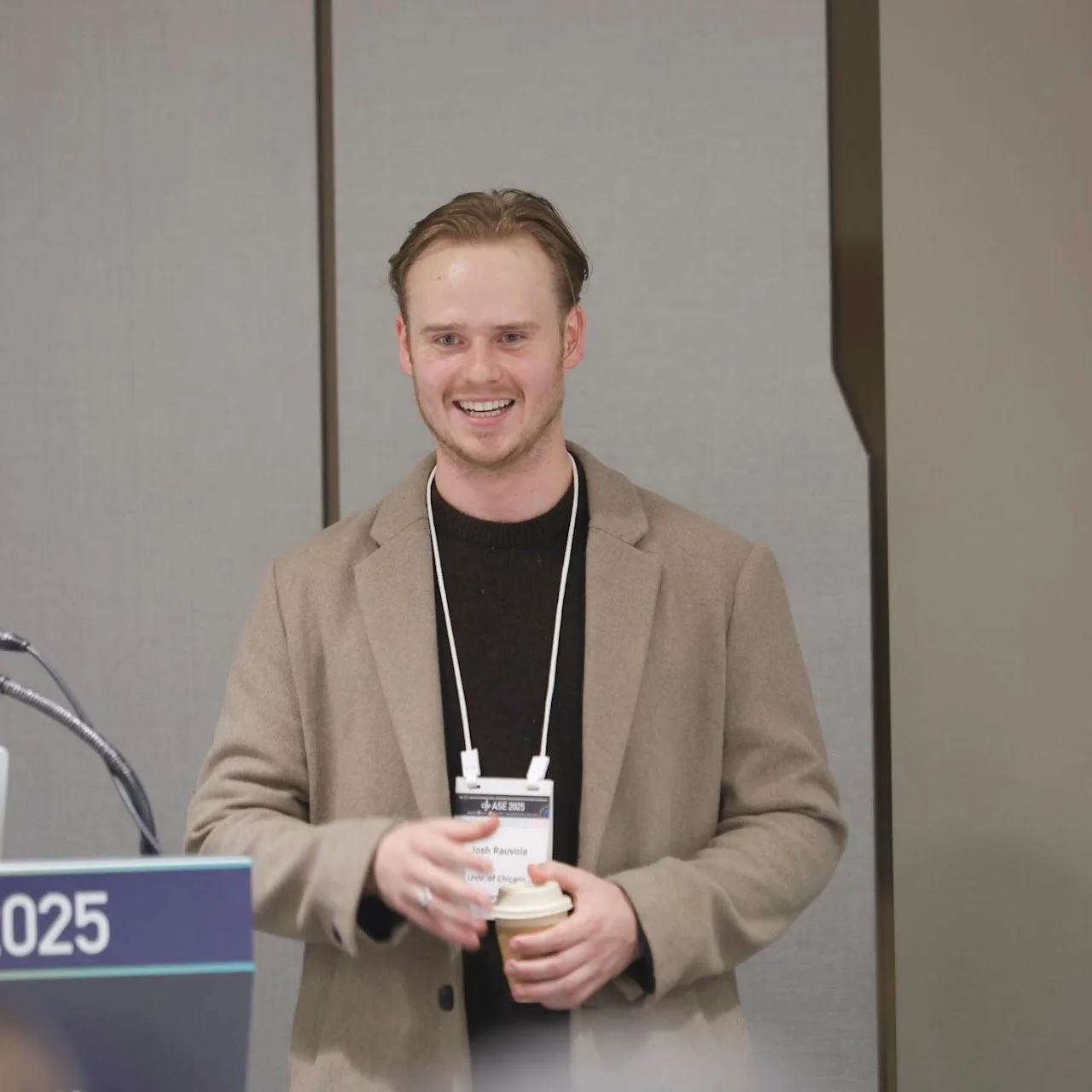
We're thrilled to share that the Digital Emissions team was featured at the ASE 2025 Intelligent Software Engineering Workshop in Seoul, South Korea. Our own Josh Rauvola took the stage to present groundbreaking research on the Fair Developer Score (FDS) - a project that reimagines how we measure developer productivity while advancing sustainable IT practices.
This milestone represents a significant step forward in our mission to bridge the gap between technology performance and environmental responsibility. By rethinking developer metrics, we're addressing a hidden driver of waste in enterprise IT operations.
“Congratulations, Josh Rauvola! For representing Digital Emissions on the international stage and sharing our vision for fair, sustainable developer metrics with the global software engineering community”.
The Problem With Traditional Metrics
In large software projects, measuring developer productivity has long been a challenge. Traditional metrics like "lines of code written" or "number of commits" often tell a misleading story. Any experienced engineer knows that 100 lines of thoughtfully crafted code that fixes a critical bug deliver far more value than 1,000 lines of trivial changes.
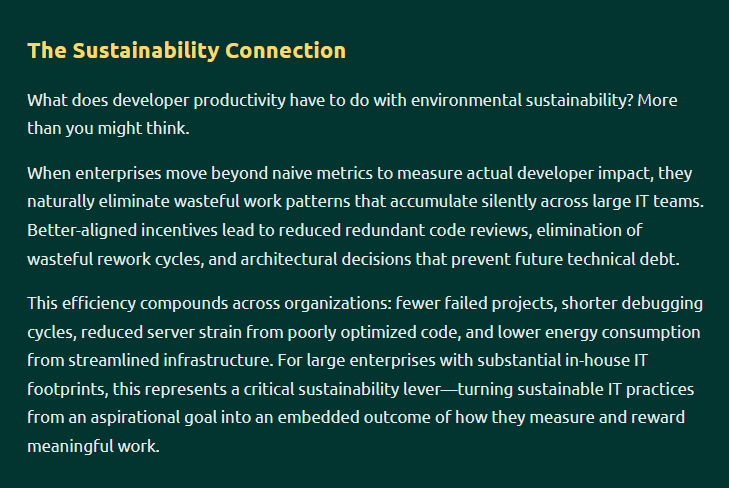
These simplistic approaches create problematic incentives: they unfairly favor certain types of work (or workers), encourage quantity over quality, and generate significant hidden waste. When developers are incentivized to produce volume rather than impact, the result is bloated codebases, technical debt, and wasted computational resources.
"The carbon cost of inefficient development, spanning wasted compute cycles, redundant infrastructure, and the cumulative energy of rework - rivals that of many physical operations in large enterprises."
Introducing the Fair Developer Score
The Fair Developer Score represents a paradigm shift in how we evaluate developer contributions. Rather than relying on crude proxies, FDS captures the actual impact of engineering work across multiple dimensions, accounting for code quality, bug resolution, architectural improvements, and meaningful contributions that move projects forward.
Core Goals of the Fair Developer Score
Fairness: Developers tackling complex, high-impact work receive proper recognition, even when that work doesn't translate to high line counts. Those producing volume without substance no longer artificially rise to the top.
Holistic View: FDS encourages a culture where both effort and impact are valued, guiding healthier team behaviors and more meaningful contributions.
Actionable Insights: Engineering leads can identify unsung heroes, spot misaligned efforts, and make data-informed decisions about team development and resource allocation.
About the Workshop
The ASE 2025 Intelligent Software Engineering Workshop brings together researchers, tool developers, practitioners, and students to advance methodologies for AI-enhanced software development. Rather than simply applying new AI technologies to specific problems, the workshop emphasizes understanding core software engineering challenges and developing thoughtful solutions.
Participants explored topics ranging from autonomous driving systems to medical AI, discussing ideas, problems, and expected outcomes that will shape the future of intelligent software engineering. We're honored to have contributed our perspective on sustainable productivity metrics to this important conversation.
